Buy comvalor.eu ?
We are moving the project
comvalor.eu .
Are you interested in purchasing the domain
comvalor.eu ?
domain@kv-gmbh.de · 0541-91531010
Buy comvalor.eu ?
How does a leg extension work in the police force?
A leg extension in the police force refers to a tactical maneuver where an officer uses their leg to create distance or control a suspect during an arrest or confrontation. This technique can be used to prevent a suspect from getting too close or to gain compliance without resorting to more forceful methods. Leg extensions are typically taught in police training to help officers effectively manage potentially volatile situations while minimizing the risk of injury to themselves or others. **
How are force, extension, and spring constant related in a spring oscillator?
In a spring oscillator, the force exerted by the spring is directly proportional to the extension of the spring. This relationship is described by Hooke's Law, which states that the force is equal to the spring constant multiplied by the extension. The spring constant represents the stiffness of the spring and determines how much force is required to produce a certain extension. Therefore, in a spring oscillator, the force, extension, and spring constant are all interrelated through Hooke's Law. **


Similar search terms for FORCE-8043250W-Extension-sockets
Top-Angebote
Products related to FORCE-8043250W-Extension-sockets:
-
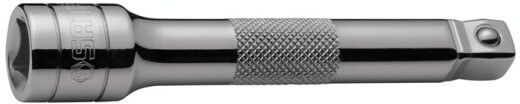
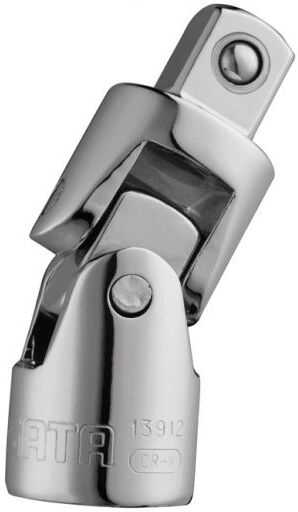
UNIOR 600874 Extension, socketsDrive [inch]: 1/2; Square Drive Tang Size [mm (inch)]: 12.5 (1/2); Drive side (profile): Rectangle; Length [mm]: 125; Diameter 1 [mm]: 16.8; Diameter 2 [mm]: 24; Weight [g]: 178; Material: Chrome Vanadium Steel; Processing: Hardened, Forged; Surface: Chromed, Polished; DIN/ISO: ISO 1456:2009, ISO 33166,99 £*Shipping: 8,45 £Secure redirect to the provider




-
How does the acting force relate to the extension of a spring?
The acting force on a spring is directly related to the extension of the spring. According to Hooke's law, the force exerted on a spring is directly proportional to the extension or compression of the spring. This means that as the force applied to the spring increases, the extension of the spring also increases. Conversely, as the force decreases, the spring returns to its original length. This relationship is linear and can be described by the equation F = kx, where F is the force, k is the spring constant, and x is the extension of the spring. **
-
Can French sockets be replaced by German sockets?
No, French sockets cannot be replaced by German sockets without making significant changes to the electrical wiring and infrastructure. French sockets are designed to accommodate the French electrical system, which operates at a different voltage and frequency than the German electrical system. Additionally, the physical dimensions and pin configurations of French and German sockets are different, so they are not interchangeable without extensive modifications. It is important to consult with a qualified electrician to ensure that any changes to electrical sockets are done safely and in compliance with local regulations. **
-
How do I calculate the tension force and spring force? How do I find the suitable extension spring online for the solution?
To calculate the tension force in a spring, you can use the formula F = kx, where F is the force, k is the spring constant, and x is the displacement from the equilibrium position. The spring force can be calculated using Hooke's Law, F = kx, where F is the force, k is the spring constant, and x is the displacement from the equilibrium position. To find a suitable extension spring online, you can search for springs based on the required force, spring constant, and displacement range. Look for a spring that meets the specifications of your application and ensure that it can provide the required tension force and spring force. **
-
How high should the attenuation value be for network sockets?
The attenuation value for network sockets should ideally be as low as possible. This is because attenuation represents the loss of signal strength as it travels through the network, and a high attenuation value indicates a significant loss of signal. A low attenuation value ensures that the signal remains strong and reliable as it travels through the network, leading to better performance and fewer data transmission errors. Therefore, network sockets with low attenuation values are preferred for maintaining a high-quality and efficient network connection. **
Are wet sockets dangerous?
Yes, wet sockets can be dangerous. When an electrical socket gets wet, it can create a risk of electric shock or even a fire hazard. Water can conduct electricity, so if the socket is wet and someone tries to plug something in, they could be at risk of getting shocked. It's important to keep sockets dry and address any water damage to prevent potential hazards. **
Can sockets catch fire?
Yes, sockets can catch fire if they are overloaded with too many devices drawing power, if they are damaged or faulty, or if they are used with the wrong type of plug. Overheating due to poor wiring or insulation can also cause sockets to catch fire. It is important to regularly inspect and maintain sockets to prevent potential fire hazards. Using surge protectors and not overloading sockets can also help reduce the risk of fire. **
Top-Angebote
Products related to FORCE-8043250W-Extension-sockets:
-
How does a leg extension work in the police force?
A leg extension in the police force refers to a tactical maneuver where an officer uses their leg to create distance or control a suspect during an arrest or confrontation. This technique can be used to prevent a suspect from getting too close or to gain compliance without resorting to more forceful methods. Leg extensions are typically taught in police training to help officers effectively manage potentially volatile situations while minimizing the risk of injury to themselves or others. **
-
How are force, extension, and spring constant related in a spring oscillator?
In a spring oscillator, the force exerted by the spring is directly proportional to the extension of the spring. This relationship is described by Hooke's Law, which states that the force is equal to the spring constant multiplied by the extension. The spring constant represents the stiffness of the spring and determines how much force is required to produce a certain extension. Therefore, in a spring oscillator, the force, extension, and spring constant are all interrelated through Hooke's Law. **
-
How does the acting force relate to the extension of a spring?
The acting force on a spring is directly related to the extension of the spring. According to Hooke's law, the force exerted on a spring is directly proportional to the extension or compression of the spring. This means that as the force applied to the spring increases, the extension of the spring also increases. Conversely, as the force decreases, the spring returns to its original length. This relationship is linear and can be described by the equation F = kx, where F is the force, k is the spring constant, and x is the extension of the spring. **
-
Can French sockets be replaced by German sockets?
No, French sockets cannot be replaced by German sockets without making significant changes to the electrical wiring and infrastructure. French sockets are designed to accommodate the French electrical system, which operates at a different voltage and frequency than the German electrical system. Additionally, the physical dimensions and pin configurations of French and German sockets are different, so they are not interchangeable without extensive modifications. It is important to consult with a qualified electrician to ensure that any changes to electrical sockets are done safely and in compliance with local regulations. **
Similar search terms for FORCE-8043250W-Extension-sockets
-
UNIOR 600874 Extension, socketsDrive [inch]: 1/2; Square Drive Tang Size [mm (inch)]: 12.5 (1/2); Drive side (profile): Rectangle; Length [mm]: 125; Diameter 1 [mm]: 16.8; Diameter 2 [mm]: 24; Weight [g]: 178; Material: Chrome Vanadium Steel; Processing: Hardened, Forged; Surface: Chromed, Polished; DIN/ISO: ISO 1456:2009, ISO 33166,99 £*Shipping: 8,45 £Secure redirect to the provider
-
How do I calculate the tension force and spring force? How do I find the suitable extension spring online for the solution?
To calculate the tension force in a spring, you can use the formula F = kx, where F is the force, k is the spring constant, and x is the displacement from the equilibrium position. The spring force can be calculated using Hooke's Law, F = kx, where F is the force, k is the spring constant, and x is the displacement from the equilibrium position. To find a suitable extension spring online, you can search for springs based on the required force, spring constant, and displacement range. Look for a spring that meets the specifications of your application and ensure that it can provide the required tension force and spring force. **
-
How high should the attenuation value be for network sockets?
The attenuation value for network sockets should ideally be as low as possible. This is because attenuation represents the loss of signal strength as it travels through the network, and a high attenuation value indicates a significant loss of signal. A low attenuation value ensures that the signal remains strong and reliable as it travels through the network, leading to better performance and fewer data transmission errors. Therefore, network sockets with low attenuation values are preferred for maintaining a high-quality and efficient network connection. **
-
Are wet sockets dangerous?
Yes, wet sockets can be dangerous. When an electrical socket gets wet, it can create a risk of electric shock or even a fire hazard. Water can conduct electricity, so if the socket is wet and someone tries to plug something in, they could be at risk of getting shocked. It's important to keep sockets dry and address any water damage to prevent potential hazards. **
-
Can sockets catch fire?
Yes, sockets can catch fire if they are overloaded with too many devices drawing power, if they are damaged or faulty, or if they are used with the wrong type of plug. Overheating due to poor wiring or insulation can also cause sockets to catch fire. It is important to regularly inspect and maintain sockets to prevent potential fire hazards. Using surge protectors and not overloading sockets can also help reduce the risk of fire. **
* All prices are inclusive of VAT and, if applicable, plus shipping costs. The offer information is based on the details provided by the respective shop and is updated through automated processes. Real-time updates do not occur, so deviations can occur in individual cases. ** Note: Parts of this content were created by AI.