Buy comvalor.eu ?
We are moving the project
comvalor.eu .
Are you interested in purchasing the domain
comvalor.eu ?
domain@kv-gmbh.de · 0541-91531010
Buy comvalor.eu ?
Can complexity be objectively measured?
Complexity can be objectively measured to some extent, especially in the context of information theory and algorithmic complexity. In information theory, complexity can be measured using metrics such as entropy and Kolmogorov complexity, which provide objective measures of the amount of information or computational resources required to describe a system. However, when it comes to measuring the complexity of real-world systems or phenomena, there is often a subjective element involved, as different observers may prioritize different aspects of complexity. Therefore, while certain aspects of complexity can be objectively measured, the overall assessment of complexity may still involve some degree of subjectivity. **
What is the complexity of Mergesort?
The time complexity of Mergesort is O(n log n) in the worst-case scenario, where n is the number of elements in the array. This complexity arises from the fact that Mergesort divides the array into halves recursively and then merges them back together in sorted order. The space complexity of Mergesort is O(n) due to the need for additional space to store the divided subarrays during the sorting process. Overall, Mergesort is an efficient sorting algorithm that performs well on large datasets. **

Similar search terms for Complexity
Top-Angebote
Products related to Complexity:
-
HARPERCOLLINS Creative Confidence by Tom & David Kelley – Unleashing Your Creative Potential & Innovation MindsetA powerful and inspiring book from the founders of IDEO, the award-winning design firm, on unleashing the creativity that lies within each and every one of us. Too often, companies and individuals assume that creativity and innovation are the domain of the ‘creative types’. But two of the foremost experts in innovation, design and creativity on the planet show us that each and every one of us is creative. In an entertaining and inspiring narrative that draws on countless stories from their work at IDEO, and with many of the world's top companies and design firms, David and Tom Kelley identify the principles and strategies that will allow us to tap into our creative potential in our work lives, and in our personal lives, allow us to think outside the box in terms of how we approach and solve problems. ‘Creative Confidence’ is a book that will help each of us be more productive and successful in our lives and in our careers.4,95 £*Shipping: 1,99 £Secure redirect to the provider
-
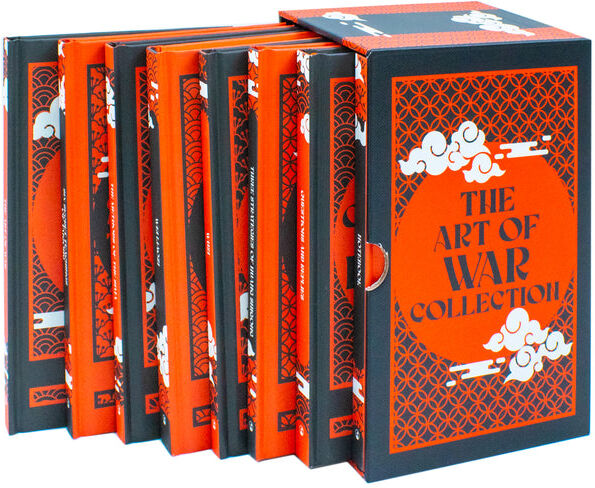
Classic Editions The Complete Art of War – 8 Book Hardback Box Set Sun Tzu & Ancient Chinese Military Strategy Classics Leadership, Warfare & Strategy CollectionExplore centuries of strategic thinking with The Complete Art of War – 8 Books Collection Hardback Box Set, an impressive collection of classical Chinese writings on warfare, leadership, tactics and strategy. Bringing together influential works from ancient Chinese military thought, this hardback collection includes titles such as The Art of War, Methods of the Sima, Wuzi, Wei Liaozi, Three Strategies of Huang Shigong, and Six Secret Teachings of Taigong, alongside additional works included in the eight-volume set. These enduring texts examine subjects including leadership, planning, discipline, intelligence, diplomacy, battlefield tactics and strategic decision-making. Although written in the context of ancient warfare, many of their principles have subsequently attracted readers interested in history, leadership and strategic thinking. Presented as an 8-volume hardback boxed collection, the set is ideal for readers of military history, students of classical philosophy and collectors of beautifully presented classic works. Why Readers Will Love This Collection Includes 8 hardback volumes in a collectible box set Features influential works of ancient Chinese military strategy Explores strategy, leadership, tactics and decision-making Excellent addition to military history and philosophy collections Attractive hardback format for a home or study library Ideal gift for history, strategy and classic literature enthusiasts The Complete Art of War 8 Book Collection brings together some of history's most enduring works on strategy in one impressive hardback set. Titles In This Set: Notebook Questions and Replies Three Strategies of Huang Shigong Wuzi Wei Liaozi The Methods of The Sima Six Secret Teachings of Taigong The Art of War16,99 £*Shipping: 2,99 £Secure redirect to the provider
-
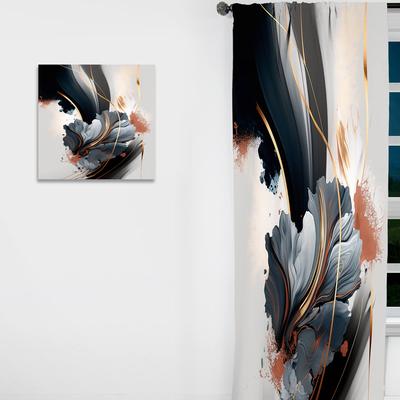
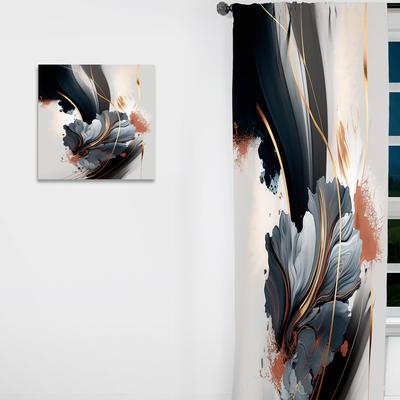
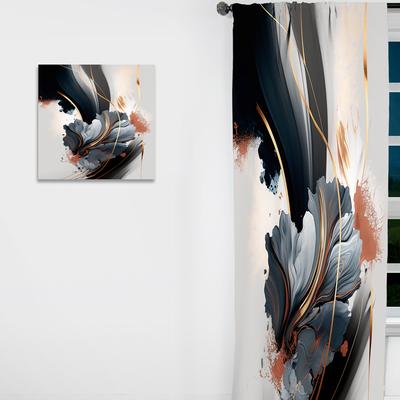
DESIGN ART "Designart ""Gold Purple Transcending Complexity II"" Abstract Curtain - Blackout Abstract Curtain - 1 Panel""Bring a breath of fresh air to your windows and spruce up any space in your home with this ""Gold Purple Transcending Complexity II"" Abstract 1 panel curtain. This beautiful Modern & Contemporary curtain is handmade on demand just for you."87,49 $*Shipping: 0,00 $Secure redirect to the provider

-
How can one get rid of complexity?
One can get rid of complexity by breaking down the problem or situation into smaller, more manageable parts. This can help to identify the root causes of the complexity and address them individually. Additionally, simplifying processes, communication, and decision-making can help reduce complexity. It is also important to prioritize and focus on the most important aspects, while letting go of unnecessary details. Finally, seeking input and collaboration from others can provide fresh perspectives and help to streamline complex situations. **
-
What is the complexity of composing two functions?
Composing two functions has a complexity of O(1), as it involves simply applying one function to the output of the other. The time complexity does not depend on the size of the input, as the functions are applied sequentially. Therefore, the complexity of composing two functions is constant and does not increase with the size of the input. **
-
How do you determine the complexity of a function?
The complexity of a function can be determined by analyzing its time and space requirements. This can be done by examining the number of operations the function performs and the amount of memory it uses. Additionally, the complexity can be influenced by the size of the input data and the efficiency of the algorithm used in the function. By considering these factors, one can determine the complexity of a function, which is often expressed using Big O notation. **
-
What are the Big O notations for time complexity?
The Big O notations for time complexity are used to describe the upper bound on the growth rate of an algorithm's running time as the input size increases. Some common Big O notations include O(1) for constant time complexity, O(log n) for logarithmic time complexity, O(n) for linear time complexity, O(n^2) for quadratic time complexity, and O(2^n) for exponential time complexity. These notations help in analyzing and comparing the efficiency of different algorithms. **
What are the Landau symbols for the time complexity?
The Landau symbols for time complexity are commonly used to describe the upper and lower bounds of an algorithm's running time. The most commonly used Landau symbols for time complexity are O (big O) for upper bound, Ω (big omega) for lower bound, and Θ (big theta) for both upper and lower bounds. These symbols are used to express the growth rate of an algorithm's running time in terms of the input size. For example, if an algorithm has a time complexity of O(n^2), it means that the running time of the algorithm grows no faster than n^2 as the input size increases. **
What does the complexity class NP mean in computer science?
In computer science, the complexity class NP (nondeterministic polynomial time) refers to a set of decision problems that can be verified in polynomial time. This means that given a potential solution to a problem, it can be efficiently checked to determine if it is correct. However, finding the solution itself may not be efficient, as it may require trying all possible solutions. NP problems are often associated with the concept of nondeterministic Turing machines, which can guess the correct solution and then verify it in polynomial time. The question of whether NP problems can be solved in polynomial time is one of the most important open problems in computer science, known as the P vs. NP problem. **
Top-Angebote
Products related to Complexity:
-
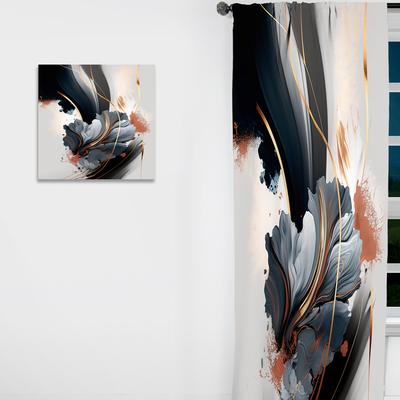
DESIGN ART "Designart ""Gold Purple Transcending Complexity II"" Abstract Curtain - Blackout Abstract Curtain - 1 Panel""Bring a breath of fresh air to your windows and spruce up any space in your home with this ""Gold Purple Transcending Complexity II"" Abstract 1 panel curtain. This beautiful Modern & Contemporary curtain is handmade on demand just for you."75,99 $*Shipping: 0,00 $Secure redirect to the provider
-
Sesderma Reti Age 5 Liposomal Serum Anti-Aging Innovation 30mLA facial serum for wrinkles and signs of ageing. Reduces wrinkles and fine lines. Hydrates and strengthens barrier. Restores youthful radiance. 5-Retinoid System: smooths wrinkles, accelerates renewal, and boosts collagen. Biomimetic Peptides: fill expression lines by stimulating collagen synthesis.54,51 £*Shipping: 5,34 £Secure redirect to the provider
-
HARPERCOLLINS Creative Confidence by Tom & David Kelley – Unleashing Your Creative Potential & Innovation MindsetA powerful and inspiring book from the founders of IDEO, the award-winning design firm, on unleashing the creativity that lies within each and every one of us. Too often, companies and individuals assume that creativity and innovation are the domain of the ‘creative types’. But two of the foremost experts in innovation, design and creativity on the planet show us that each and every one of us is creative. In an entertaining and inspiring narrative that draws on countless stories from their work at IDEO, and with many of the world's top companies and design firms, David and Tom Kelley identify the principles and strategies that will allow us to tap into our creative potential in our work lives, and in our personal lives, allow us to think outside the box in terms of how we approach and solve problems. ‘Creative Confidence’ is a book that will help each of us be more productive and successful in our lives and in our careers.4,95 £*Shipping: 1,99 £Secure redirect to the provider
-
Classic Editions The Complete Art of War – 8 Book Hardback Box Set Sun Tzu & Ancient Chinese Military Strategy Classics Leadership, Warfare & Strategy CollectionExplore centuries of strategic thinking with The Complete Art of War – 8 Books Collection Hardback Box Set, an impressive collection of classical Chinese writings on warfare, leadership, tactics and strategy. Bringing together influential works from ancient Chinese military thought, this hardback collection includes titles such as The Art of War, Methods of the Sima, Wuzi, Wei Liaozi, Three Strategies of Huang Shigong, and Six Secret Teachings of Taigong, alongside additional works included in the eight-volume set. These enduring texts examine subjects including leadership, planning, discipline, intelligence, diplomacy, battlefield tactics and strategic decision-making. Although written in the context of ancient warfare, many of their principles have subsequently attracted readers interested in history, leadership and strategic thinking. Presented as an 8-volume hardback boxed collection, the set is ideal for readers of military history, students of classical philosophy and collectors of beautifully presented classic works. Why Readers Will Love This Collection Includes 8 hardback volumes in a collectible box set Features influential works of ancient Chinese military strategy Explores strategy, leadership, tactics and decision-making Excellent addition to military history and philosophy collections Attractive hardback format for a home or study library Ideal gift for history, strategy and classic literature enthusiasts The Complete Art of War 8 Book Collection brings together some of history's most enduring works on strategy in one impressive hardback set. Titles In This Set: Notebook Questions and Replies Three Strategies of Huang Shigong Wuzi Wei Liaozi The Methods of The Sima Six Secret Teachings of Taigong The Art of War16,99 £*Shipping: 2,99 £Secure redirect to the provider
-
Can complexity be objectively measured?
Complexity can be objectively measured to some extent, especially in the context of information theory and algorithmic complexity. In information theory, complexity can be measured using metrics such as entropy and Kolmogorov complexity, which provide objective measures of the amount of information or computational resources required to describe a system. However, when it comes to measuring the complexity of real-world systems or phenomena, there is often a subjective element involved, as different observers may prioritize different aspects of complexity. Therefore, while certain aspects of complexity can be objectively measured, the overall assessment of complexity may still involve some degree of subjectivity. **
-
What is the complexity of Mergesort?
The time complexity of Mergesort is O(n log n) in the worst-case scenario, where n is the number of elements in the array. This complexity arises from the fact that Mergesort divides the array into halves recursively and then merges them back together in sorted order. The space complexity of Mergesort is O(n) due to the need for additional space to store the divided subarrays during the sorting process. Overall, Mergesort is an efficient sorting algorithm that performs well on large datasets. **
-
How can one get rid of complexity?
One can get rid of complexity by breaking down the problem or situation into smaller, more manageable parts. This can help to identify the root causes of the complexity and address them individually. Additionally, simplifying processes, communication, and decision-making can help reduce complexity. It is also important to prioritize and focus on the most important aspects, while letting go of unnecessary details. Finally, seeking input and collaboration from others can provide fresh perspectives and help to streamline complex situations. **
-
What is the complexity of composing two functions?
Composing two functions has a complexity of O(1), as it involves simply applying one function to the output of the other. The time complexity does not depend on the size of the input, as the functions are applied sequentially. Therefore, the complexity of composing two functions is constant and does not increase with the size of the input. **
Similar search terms for Complexity
-
DESIGN ART "Designart ""Gold Purple Transcending Complexity II"" Abstract Curtain - Blackout Abstract Curtain - 1 Panel""Bring a breath of fresh air to your windows and spruce up any space in your home with this ""Gold Purple Transcending Complexity II"" Abstract 1 panel curtain. This beautiful Modern & Contemporary curtain is handmade on demand just for you."87,49 $*Shipping: 0,00 $Secure redirect to the provider
-
DESIGN ART "Designart ""Gold Purple Transcending Complexity II"" Abstract Curtain - Blackout Abstract Curtain - 1 Panel""Bring a breath of fresh air to your windows and spruce up any space in your home with this ""Gold Purple Transcending Complexity II"" Abstract 1 panel curtain. This beautiful Modern & Contemporary curtain is handmade on demand just for you."92,99 $*Shipping: 0,00 $Secure redirect to the provider
-
DESIGN ART "Designart ""Gold Purple Transcending Complexity II"" Abstract Curtain - Blackout Abstract Curtain - 1 Panel""Bring a breath of fresh air to your windows and spruce up any space in your home with this ""Gold Purple Transcending Complexity II"" Abstract 1 panel curtain. This beautiful Modern & Contemporary curtain is handmade on demand just for you."95,49 $*Shipping: 0,00 $Secure redirect to the provider
-
How do you determine the complexity of a function?
The complexity of a function can be determined by analyzing its time and space requirements. This can be done by examining the number of operations the function performs and the amount of memory it uses. Additionally, the complexity can be influenced by the size of the input data and the efficiency of the algorithm used in the function. By considering these factors, one can determine the complexity of a function, which is often expressed using Big O notation. **
-
What are the Big O notations for time complexity?
The Big O notations for time complexity are used to describe the upper bound on the growth rate of an algorithm's running time as the input size increases. Some common Big O notations include O(1) for constant time complexity, O(log n) for logarithmic time complexity, O(n) for linear time complexity, O(n^2) for quadratic time complexity, and O(2^n) for exponential time complexity. These notations help in analyzing and comparing the efficiency of different algorithms. **
-
What are the Landau symbols for the time complexity?
The Landau symbols for time complexity are commonly used to describe the upper and lower bounds of an algorithm's running time. The most commonly used Landau symbols for time complexity are O (big O) for upper bound, Ω (big omega) for lower bound, and Θ (big theta) for both upper and lower bounds. These symbols are used to express the growth rate of an algorithm's running time in terms of the input size. For example, if an algorithm has a time complexity of O(n^2), it means that the running time of the algorithm grows no faster than n^2 as the input size increases. **
-
What does the complexity class NP mean in computer science?
In computer science, the complexity class NP (nondeterministic polynomial time) refers to a set of decision problems that can be verified in polynomial time. This means that given a potential solution to a problem, it can be efficiently checked to determine if it is correct. However, finding the solution itself may not be efficient, as it may require trying all possible solutions. NP problems are often associated with the concept of nondeterministic Turing machines, which can guess the correct solution and then verify it in polynomial time. The question of whether NP problems can be solved in polynomial time is one of the most important open problems in computer science, known as the P vs. NP problem. **
* All prices are inclusive of VAT and, if applicable, plus shipping costs. The offer information is based on the details provided by the respective shop and is updated through automated processes. Real-time updates do not occur, so deviations can occur in individual cases. ** Note: Parts of this content were created by AI.