Buy comvalor.eu ?
We are moving the project
comvalor.eu .
Are you interested in purchasing the domain
comvalor.eu ?
domain@kv-gmbh.de · 0541-91531010
Buy comvalor.eu ?
What is alternating voltage and alternating current?
Alternating voltage is a type of electrical current where the flow of electricity periodically reverses direction. This results in a waveform that fluctuates between positive and negative values. Alternating current is the flow of electric charge that changes direction periodically. It is commonly used in household electrical outlets and is the type of electricity generated by power plants. **
What are examples of alternating current and alternating voltage?
Examples of alternating current include the electricity that powers our homes and businesses, as well as the electricity generated by power plants. Alternating voltage can be found in household appliances, such as refrigerators, air conditioners, and televisions, as well as in industrial machinery and equipment. Both alternating current and voltage are essential for the distribution and use of electrical power in our daily lives. **


Similar search terms for Alternating
Top-Angebote
Products related to Alternating:
-
HARPERCOLLINS Creative Confidence by Tom & David Kelley – Unleashing Your Creative Potential & Innovation MindsetA powerful and inspiring book from the founders of IDEO, the award-winning design firm, on unleashing the creativity that lies within each and every one of us. Too often, companies and individuals assume that creativity and innovation are the domain of the ‘creative types’. But two of the foremost experts in innovation, design and creativity on the planet show us that each and every one of us is creative. In an entertaining and inspiring narrative that draws on countless stories from their work at IDEO, and with many of the world's top companies and design firms, David and Tom Kelley identify the principles and strategies that will allow us to tap into our creative potential in our work lives, and in our personal lives, allow us to think outside the box in terms of how we approach and solve problems. ‘Creative Confidence’ is a book that will help each of us be more productive and successful in our lives and in our careers.4,95 £*Shipping: 1,99 £Secure redirect to the provider
-
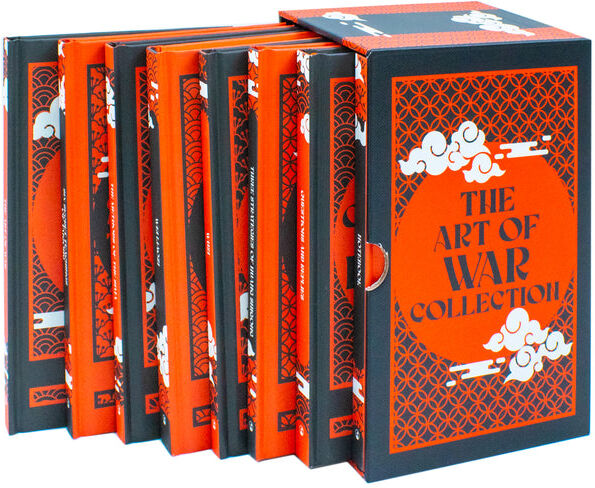
Classic Editions The Complete Art of War – 8 Book Hardback Box Set Sun Tzu & Ancient Chinese Military Strategy Classics Leadership, Warfare & Strategy CollectionExplore centuries of strategic thinking with The Complete Art of War – 8 Books Collection Hardback Box Set, an impressive collection of classical Chinese writings on warfare, leadership, tactics and strategy. Bringing together influential works from ancient Chinese military thought, this hardback collection includes titles such as The Art of War, Methods of the Sima, Wuzi, Wei Liaozi, Three Strategies of Huang Shigong, and Six Secret Teachings of Taigong, alongside additional works included in the eight-volume set. These enduring texts examine subjects including leadership, planning, discipline, intelligence, diplomacy, battlefield tactics and strategic decision-making. Although written in the context of ancient warfare, many of their principles have subsequently attracted readers interested in history, leadership and strategic thinking. Presented as an 8-volume hardback boxed collection, the set is ideal for readers of military history, students of classical philosophy and collectors of beautifully presented classic works. Why Readers Will Love This Collection Includes 8 hardback volumes in a collectible box set Features influential works of ancient Chinese military strategy Explores strategy, leadership, tactics and decision-making Excellent addition to military history and philosophy collections Attractive hardback format for a home or study library Ideal gift for history, strategy and classic literature enthusiasts The Complete Art of War 8 Book Collection brings together some of history's most enduring works on strategy in one impressive hardback set. Titles In This Set: Notebook Questions and Replies Three Strategies of Huang Shigong Wuzi Wei Liaozi The Methods of The Sima Six Secret Teachings of Taigong The Art of War16,99 £*Shipping: 2,99 £Secure redirect to the provider
-
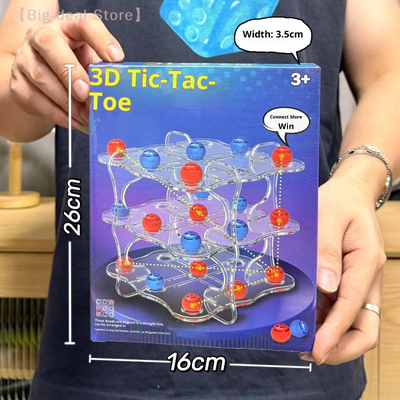
Multisell Products Hub Easy To Play Chess Board Game Toy, Educational Strategy Table Games Easy To Play Chess Board Game Toy, Educational Strategy Table GamesEngage Your Mind with a Classic Chess Board Game The Chess Board Game Toy is a timeless strategy game that offers endless fun for both beginners and experienced players. Designed to be easy to play, this game is perfect for improving focus,...49,97 $*Shipping: 0,00 $Secure redirect to the provider


-
What is the difference between alternating current and alternating voltage?
Alternating current (AC) refers to the flow of electric charge that periodically reverses direction, while alternating voltage refers to the changing voltage levels in an electrical circuit. AC is the type of current that flows through a circuit, while alternating voltage is the type of voltage that is applied to the circuit. In other words, AC is the movement of electric charge, while alternating voltage is the fluctuation in electric potential. **
-
What is the correct effective value of an alternating voltage?
The correct effective value of an alternating voltage is the equivalent constant voltage that would produce the same amount of power as the alternating voltage when applied across a resistive load. Mathematically, it is calculated as the square root of the mean of the squares of the instantaneous values of the voltage over one complete cycle. This effective value is also known as the root mean square (RMS) value and is commonly used to compare alternating voltages with direct voltages. **
-
Who developed alternating current?
Alternating current (AC) was developed by Nikola Tesla, a Serbian-American inventor, electrical engineer, and physicist. Tesla's work on AC power systems laid the foundation for the modern electrical grid and revolutionized the way electricity is generated, transmitted, and used. His development of AC technology was crucial in the "War of Currents" against Thomas Edison's direct current (DC) system, ultimately leading to the widespread adoption of AC as the standard for electrical power distribution. **
-
What is the difference between physics alternating current and alternating current effects?
Physics alternating current refers to the flow of electric charge that periodically reverses direction, typically used in electrical circuits. Alternating current effects, on the other hand, refer to the various phenomena and impacts of alternating current on different devices and systems. While physics alternating current describes the nature of the current itself, alternating current effects focus on how this type of current can be utilized or its consequences on different applications. **
How are alternating voltage and alternating current referred to as time-dependent quantities?
Alternating voltage and alternating current are referred to as time-dependent quantities because their magnitudes and directions change over time. In the case of alternating voltage, the polarity and magnitude of the voltage change periodically, while in the case of alternating current, the direction and magnitude of the current change periodically. This time-dependent nature is represented by sinusoidal waveforms for both quantities, with the voltage and current varying with time according to a specific frequency. This time-dependent behavior is a key characteristic of alternating voltage and current and is essential for understanding their behavior in electrical circuits. **
Why is alternating current always specified with its root mean square value?
Alternating current is always specified with its root mean square (RMS) value because it represents the effective value of the current. The RMS value takes into account the varying magnitude of the current over time, providing a single value that can be used for calculations and comparisons. This is important because the instantaneous value of an AC current constantly changes direction and magnitude, making it difficult to accurately represent its overall effect without using the RMS value. Therefore, specifying AC with its RMS value allows for consistent and accurate measurements and calculations in electrical systems. **
Top-Angebote
Products related to Alternating:
-
Drop Dash Deals Premium Alternating Pressure Mattress Topper With Quiet Pump Hospital Bed Comfort & Pressure Relief Premium Alternating Pressure Mattress Topper With Quiet Pump Hospital Bed Comfort & Pressure ReliefRegain comfort, dignity, and restful rest whether youre caring for a loved one or managing long hours in bed. This 1 pc of alternating pressure mattress topper system brings therapeutic pressure redistribution right to home care, reducing prolonged...229,97 $*Shipping: 0,00 $Secure redirect to the provider
-
Pacific Pagoda 8.5 ft Patio Umbrella with Alternating Panels - Canvas Black/White Sunbrella - Ballard DesignsPatio umbrellas should do a lot more than offer welcome shade – they can set the tone for your entire outdoor living space. Our Pacific Pagoda 2-Tone Umbrella creates instant atmosphere in a playful pagoda-style silhouette with double-scalloped...1119,20 $*Shipping: 134,30 $Secure redirect to the provider
-
HARPERCOLLINS Creative Confidence by Tom & David Kelley – Unleashing Your Creative Potential & Innovation MindsetA powerful and inspiring book from the founders of IDEO, the award-winning design firm, on unleashing the creativity that lies within each and every one of us. Too often, companies and individuals assume that creativity and innovation are the domain of the ‘creative types’. But two of the foremost experts in innovation, design and creativity on the planet show us that each and every one of us is creative. In an entertaining and inspiring narrative that draws on countless stories from their work at IDEO, and with many of the world's top companies and design firms, David and Tom Kelley identify the principles and strategies that will allow us to tap into our creative potential in our work lives, and in our personal lives, allow us to think outside the box in terms of how we approach and solve problems. ‘Creative Confidence’ is a book that will help each of us be more productive and successful in our lives and in our careers.4,95 £*Shipping: 1,99 £Secure redirect to the provider
-
Classic Editions The Complete Art of War – 8 Book Hardback Box Set Sun Tzu & Ancient Chinese Military Strategy Classics Leadership, Warfare & Strategy CollectionExplore centuries of strategic thinking with The Complete Art of War – 8 Books Collection Hardback Box Set, an impressive collection of classical Chinese writings on warfare, leadership, tactics and strategy. Bringing together influential works from ancient Chinese military thought, this hardback collection includes titles such as The Art of War, Methods of the Sima, Wuzi, Wei Liaozi, Three Strategies of Huang Shigong, and Six Secret Teachings of Taigong, alongside additional works included in the eight-volume set. These enduring texts examine subjects including leadership, planning, discipline, intelligence, diplomacy, battlefield tactics and strategic decision-making. Although written in the context of ancient warfare, many of their principles have subsequently attracted readers interested in history, leadership and strategic thinking. Presented as an 8-volume hardback boxed collection, the set is ideal for readers of military history, students of classical philosophy and collectors of beautifully presented classic works. Why Readers Will Love This Collection Includes 8 hardback volumes in a collectible box set Features influential works of ancient Chinese military strategy Explores strategy, leadership, tactics and decision-making Excellent addition to military history and philosophy collections Attractive hardback format for a home or study library Ideal gift for history, strategy and classic literature enthusiasts The Complete Art of War 8 Book Collection brings together some of history's most enduring works on strategy in one impressive hardback set. Titles In This Set: Notebook Questions and Replies Three Strategies of Huang Shigong Wuzi Wei Liaozi The Methods of The Sima Six Secret Teachings of Taigong The Art of War16,99 £*Shipping: 2,99 £Secure redirect to the provider
-
What is alternating voltage and alternating current?
Alternating voltage is a type of electrical current where the flow of electricity periodically reverses direction. This results in a waveform that fluctuates between positive and negative values. Alternating current is the flow of electric charge that changes direction periodically. It is commonly used in household electrical outlets and is the type of electricity generated by power plants. **
-
What are examples of alternating current and alternating voltage?
Examples of alternating current include the electricity that powers our homes and businesses, as well as the electricity generated by power plants. Alternating voltage can be found in household appliances, such as refrigerators, air conditioners, and televisions, as well as in industrial machinery and equipment. Both alternating current and voltage are essential for the distribution and use of electrical power in our daily lives. **
-
What is the difference between alternating current and alternating voltage?
Alternating current (AC) refers to the flow of electric charge that periodically reverses direction, while alternating voltage refers to the changing voltage levels in an electrical circuit. AC is the type of current that flows through a circuit, while alternating voltage is the type of voltage that is applied to the circuit. In other words, AC is the movement of electric charge, while alternating voltage is the fluctuation in electric potential. **
-
What is the correct effective value of an alternating voltage?
The correct effective value of an alternating voltage is the equivalent constant voltage that would produce the same amount of power as the alternating voltage when applied across a resistive load. Mathematically, it is calculated as the square root of the mean of the squares of the instantaneous values of the voltage over one complete cycle. This effective value is also known as the root mean square (RMS) value and is commonly used to compare alternating voltages with direct voltages. **
Similar search terms for Alternating
-
Multisell Products Hub Easy To Play Chess Board Game Toy, Educational Strategy Table Games Easy To Play Chess Board Game Toy, Educational Strategy Table GamesEngage Your Mind with a Classic Chess Board Game The Chess Board Game Toy is a timeless strategy game that offers endless fun for both beginners and experienced players. Designed to be easy to play, this game is perfect for improving focus,...49,97 $*Shipping: 0,00 $Secure redirect to the provider
-
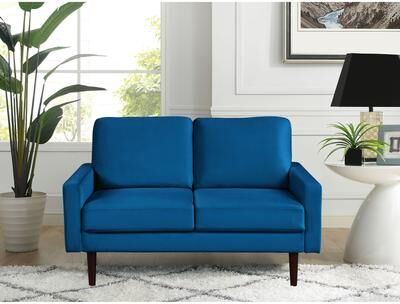
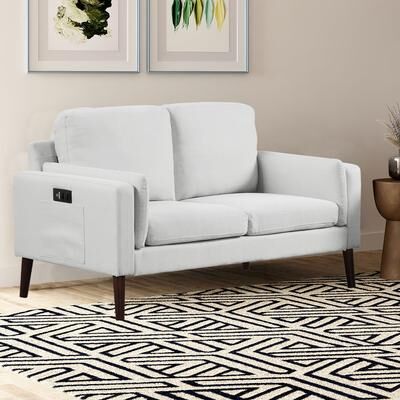
Lifestyle Solutions Napa LoveseatThe Napa Loveseat is designed not only to fit your space but also your style. The classic design and modern lines not only offer style but comfort. A hardwood frames offers sturdy support for everyday living.308,34 $*Shipping: 0,00 $Secure redirect to the provider
-
Who developed alternating current?
Alternating current (AC) was developed by Nikola Tesla, a Serbian-American inventor, electrical engineer, and physicist. Tesla's work on AC power systems laid the foundation for the modern electrical grid and revolutionized the way electricity is generated, transmitted, and used. His development of AC technology was crucial in the "War of Currents" against Thomas Edison's direct current (DC) system, ultimately leading to the widespread adoption of AC as the standard for electrical power distribution. **
-
What is the difference between physics alternating current and alternating current effects?
Physics alternating current refers to the flow of electric charge that periodically reverses direction, typically used in electrical circuits. Alternating current effects, on the other hand, refer to the various phenomena and impacts of alternating current on different devices and systems. While physics alternating current describes the nature of the current itself, alternating current effects focus on how this type of current can be utilized or its consequences on different applications. **
-
How are alternating voltage and alternating current referred to as time-dependent quantities?
Alternating voltage and alternating current are referred to as time-dependent quantities because their magnitudes and directions change over time. In the case of alternating voltage, the polarity and magnitude of the voltage change periodically, while in the case of alternating current, the direction and magnitude of the current change periodically. This time-dependent nature is represented by sinusoidal waveforms for both quantities, with the voltage and current varying with time according to a specific frequency. This time-dependent behavior is a key characteristic of alternating voltage and current and is essential for understanding their behavior in electrical circuits. **
-
Why is alternating current always specified with its root mean square value?
Alternating current is always specified with its root mean square (RMS) value because it represents the effective value of the current. The RMS value takes into account the varying magnitude of the current over time, providing a single value that can be used for calculations and comparisons. This is important because the instantaneous value of an AC current constantly changes direction and magnitude, making it difficult to accurately represent its overall effect without using the RMS value. Therefore, specifying AC with its RMS value allows for consistent and accurate measurements and calculations in electrical systems. **
* All prices are inclusive of VAT and, if applicable, plus shipping costs. The offer information is based on the details provided by the respective shop and is updated through automated processes. Real-time updates do not occur, so deviations can occur in individual cases. ** Note: Parts of this content were created by AI.